
Don’t Get Cut Off – Request a Call From Our Team
What this means for customers
On 31 January 2027, copper services stop. Any phone line, alarm, lift or card terminal still relying on PSTN will no longer work unless it has been migrated. Acting now is the only way to:
- Keep critical systems running when the copper network is switched off
- Secure your migration slot before demand peaks in the final weeks
- Stop paying for copper services that have already more than doubled in price this year
Migrations take time to survey, install and test, and every week of delay reduces the margin for error. If you haven’t started yet, this is your last chance to move before the deadline.


Our focus: getting you moved before the switch-off
We’ll identify every service on your estate that still depends on PSTN, prioritise your highest-risk sites and get you migrated before 31 January, with minimal disruption to your day-to-day operations.
Don’t leave it until it’s too late. Submit your details and a member of our team will be in touch with the next. Alternatively, reach out to your account manager at VCG who will be happy to help.
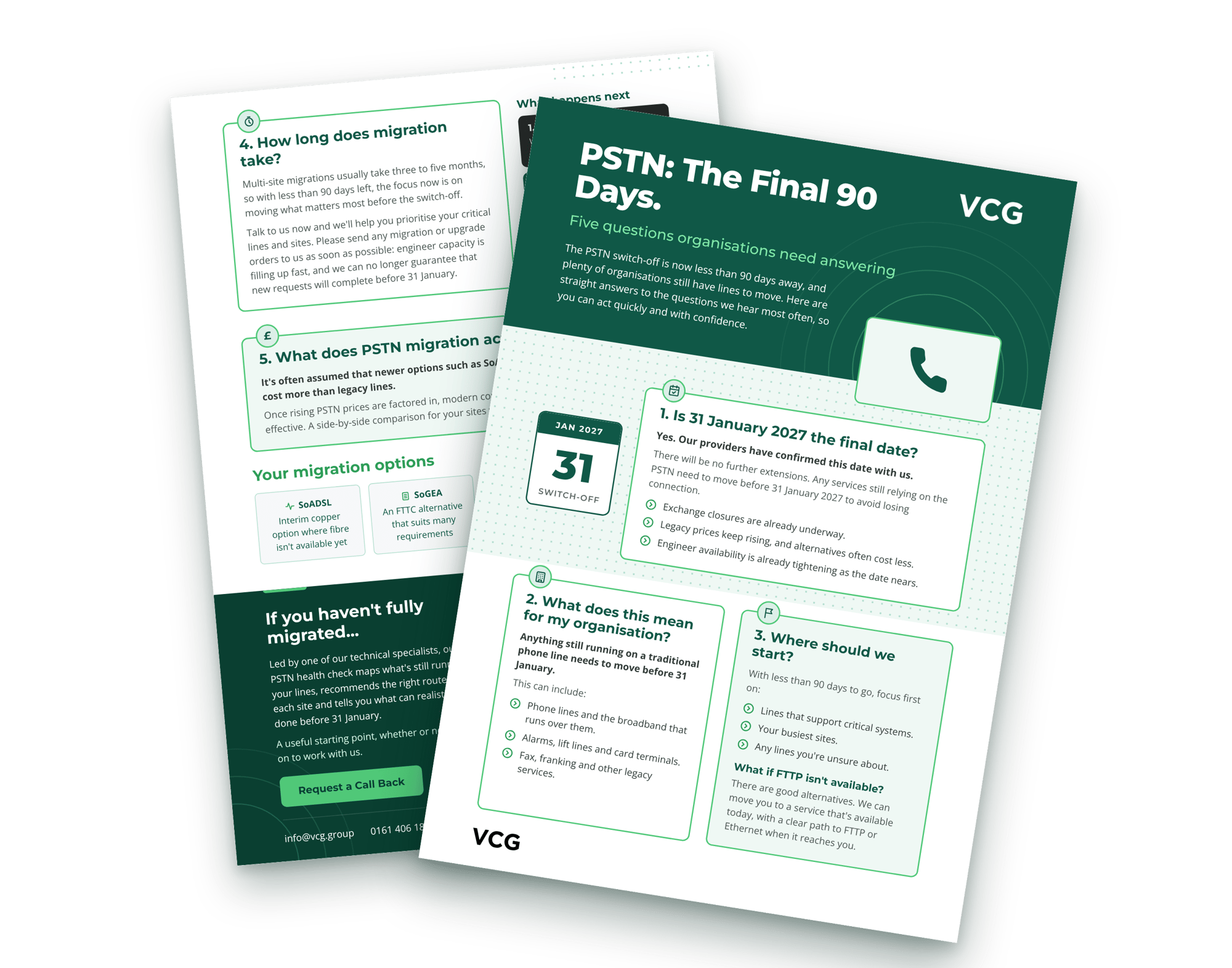
A Guide to Migrating Away from PSTN
Taking action ahead of the PSTN switch‑off is critical to avoiding disruption, rising costs, and last‑minute migrations.
This guide includes everything organisations need to know to move forward and minimise operational risks.
What we’re helping customers with today...
We help customers assess:
-
Telephony and legacy voice services
-
Payment and point‑of‑sale systems
-
Lifts, alarms and emergency lines
-
Security, CCTV and access systems
This early visibility is key to avoiding unexpected outages later.
Many organisations will take an interim step while fibre rolls out. This means:
- Using temporary connectivity where needed
- Planning transitions site by site
- Staying flexible to upgrade when fibre arrives
- Prioritising continuity, resilience and safety